Creating a relaxing home office environment is essential for maintaining focus and reducing stress, especially when working from home. A well-designed workspace not only boosts productivity but also supports your mental well-being. Whether you’re just setting up your home office or looking to refresh your existing space, these practical tips will guide you in creating a calm, inviting, and efficient environment.
1. Choose the Right Location
Finding the perfect spot for your home office is the first step. Ideally, it should be in a quiet area of your home where you can concentrate without distractions.
– Natural Light: Select a place near a window to benefit from natural sunlight, which can improve mood and energy levels.
– Away from Noise: Avoid high-traffic areas or noisy zones like the kitchen or living room to minimize interruptions.
– Dedicated Space: If possible, dedicate a room or a section exclusively for work to help your mind switch between “work mode” and relaxation.
2. Invest in Comfortable and Functional Furniture
Comfort is key when you’re spending long hours at your desk. Quality furniture can prevent physical strain and increase your enjoyment of the workspace.
– Ergonomic Chair: Choose a chair that supports good posture with adjustable height and lumbar support.
– Desk Height: Ensure your desk is at a comfortable height for typing and writing to reduce fatigue.
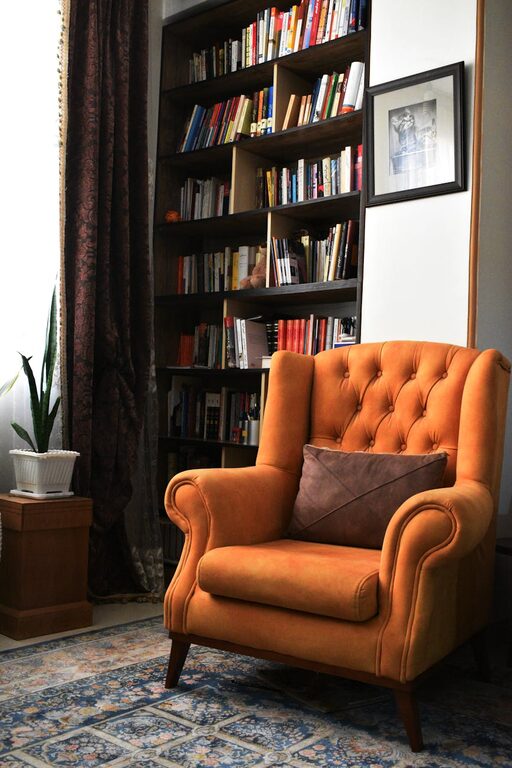
– Additional Seating: Consider a small lounge chair or cushion for breaks when you want to step away from your desk without leaving the room.
3. Optimize Lighting
Proper lighting reduces eye strain and creates a soothing ambiance.
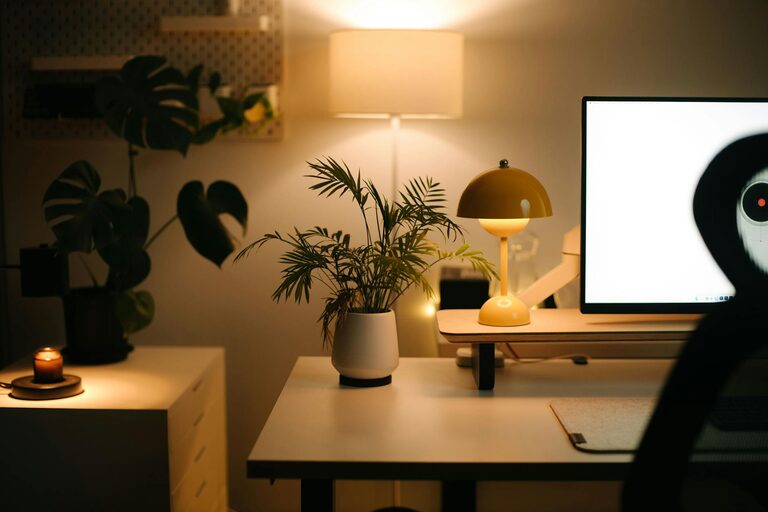
– Layered Lighting: Combine natural light with task lighting (like desk lamps) and ambient lighting (such as floor lamps).
– Warm Bulbs: Use bulbs with warm tones that mimic natural light rather than harsh white or blue lights.
– Adjustable Lamps: Position adjustable lamps so you can direct light where it’s needed most.
4. Keep Your Workspace Organized
Clutter can stress the mind and distract you from work. An organized environment promotes calmness and focus.
– Declutter Regularly: Clear your desk of unnecessary items at the end of each day.
– Storage Solutions: Use shelves, drawers, and organizers to keep books, documents, and supplies neatly stored.
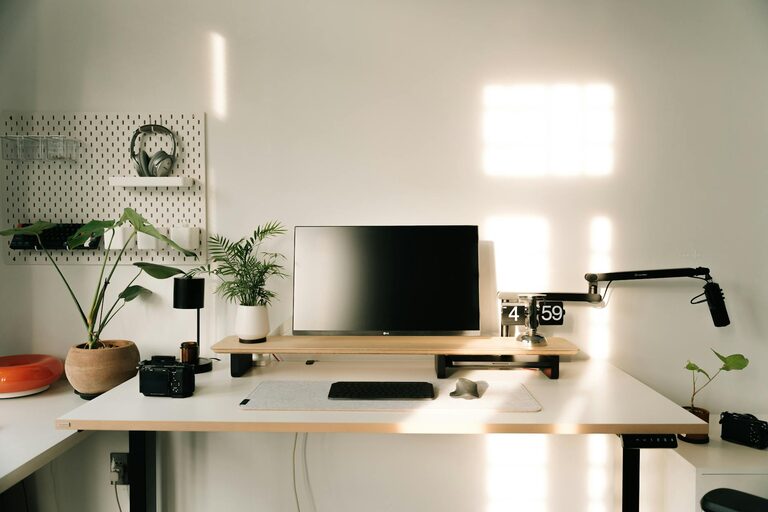
– Cable Management: Use clips, ties, or cable boxes to keep wires tidy and out of sight.
5. Personalize with Calming Elements
Adding personal touches can make your home office more inviting and tailored to your preferences.
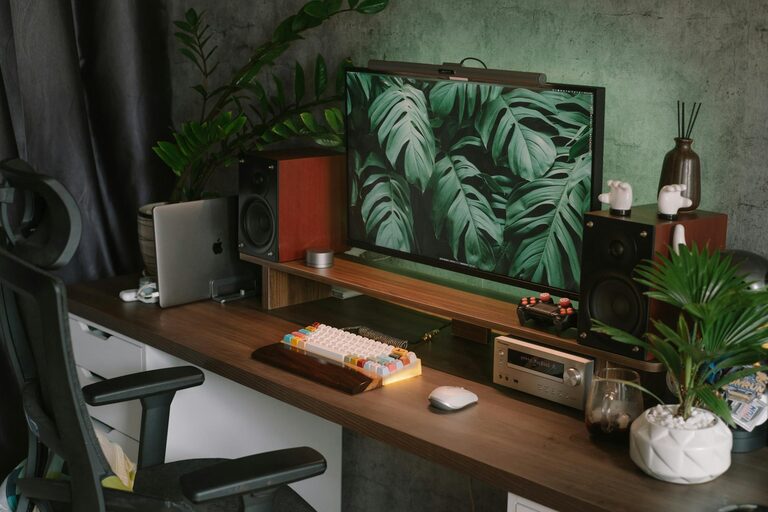
– Plants: Incorporate greenery such as small potted plants or succulents to bring life and freshness to your space.
– Artwork and Photos: Hang calming artwork or display family photos to inspire and comfort you.
– Soft Textiles: Use cushions, rugs, or curtains in soft colors to add warmth and reduce noise.
6. Control Temperature and Air Quality
Maintaining a comfortable climate helps you stay alert and relaxed.
– Temperature: Keep the room at a moderate temperature, around 68-72°F (20-22°C), which is generally comfortable for most people.
– Ventilation: Open windows when possible or use an air purifier to maintain fresh air.
– Humidity: Use a humidifier or dehumidifier if needed to keep humidity levels balanced, preventing dryness or dampness.
7. Minimize Distractions
Creating boundaries between work and home life is important for focus.
– Set Boundaries: Inform family members or housemates of your work hours to limit interruptions.
– Noise Reduction: Use noise-cancelling headphones or soft background music to block distracting sounds.
– Digital Discipline: Turn off non-essential notifications and keep your phone away during deep focus sessions.
8. Incorporate Relaxation Breaks
Taking short breaks helps reduce fatigue and maintain productivity throughout the day.
– Stretching: Use short stretch sessions to alleviate physical tension.
– Mindfulness: Practice deep breathing or quick meditation to refresh your mind.
– Move Around: Stand up, walk a bit, or change your environment briefly to reset concentration.
9. Use Calming Colors and Materials
The visual environment influences your mood and energy.
– Color Palette: Choose soft, neutral colors such as light blues, greens, or creams that promote relaxation.
– Natural Materials: Incorporate wood, stone, or natural fabrics to add texture and warmth.
10. Keep Technology Simple and Efficient
Technology can enhance your work experience but also be a source of stress if cluttered or outdated.
– Declutter Devices: Only keep essential gadgets and accessories on your desk.
– Use Quality Equipment: Invest in reliable tech tools like a good keyboard, mouse, and monitor for ease of use.
– Smart Organization Apps: Use apps to manage tasks and schedules without overloading with notifications.
—
Final Thoughts
A relaxing home office environment is achievable by combining thoughtful design, organization, and self-care practices. Making your workspace a place you enjoy spending time in will support your productivity and mental wellness, leading to a healthier work-from-home routine. Start with small changes and customize your space to what works best for you!
By following these tips, you can create a home office that feels like a personal sanctuary for focus and relaxation.
About the Author